 bathroom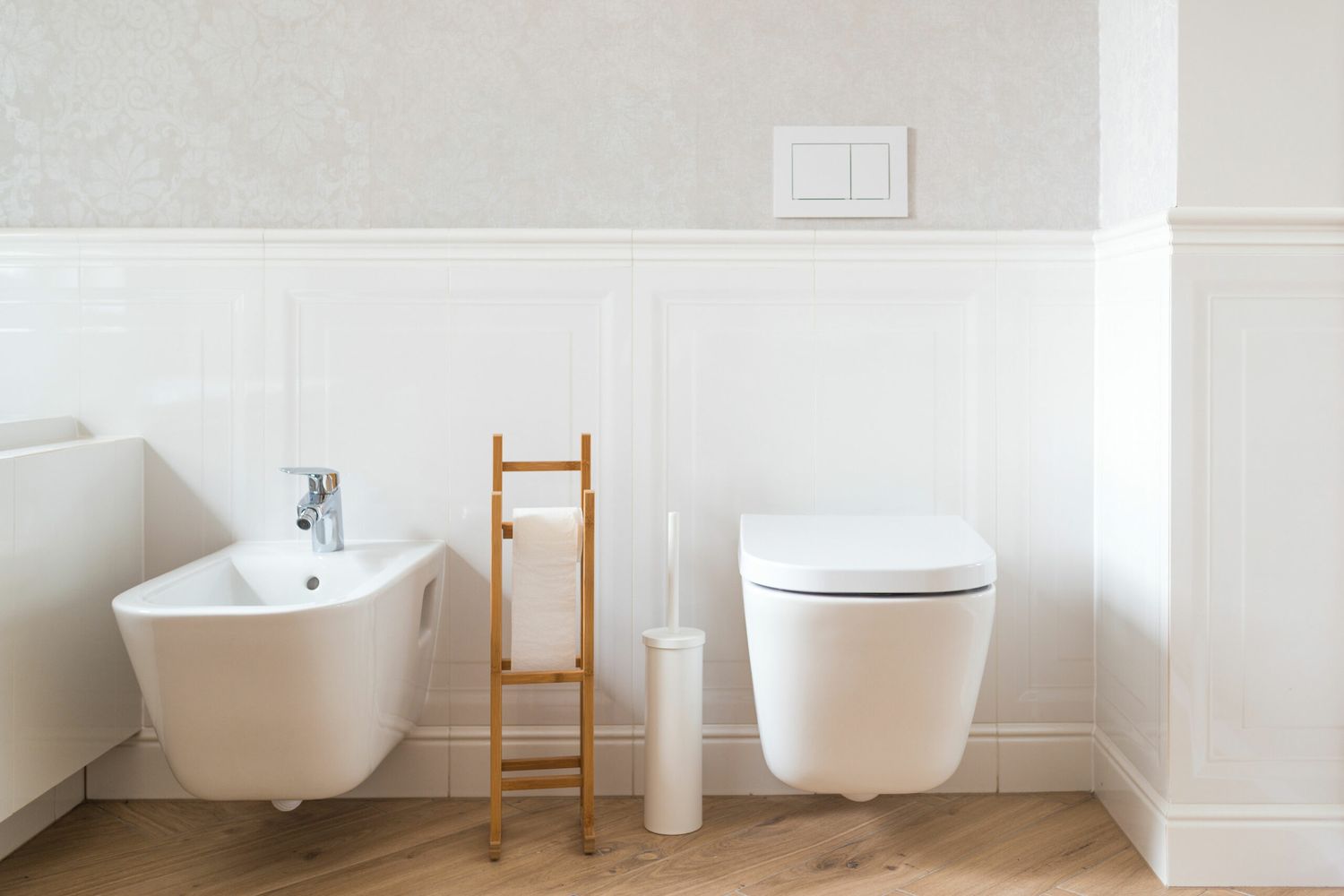
Bidets have been a staple in European bathrooms since the early 1700s and are quickly gaining popularity in high-end American homes. To install one in your bathroom, you only need some basic plumbing tools and skills.
Types of Bidets
Bidets tend to fall into three categories. Each offers improved hygiene and comfort, but some are more practical for specific personal needs. Here’s a little more on each type.
Traditional Stand-Alone Bidets
Traditional stand-alone bidets are separate fixtures resembling a low sink or toilet. They require dedicated space and plumbing, including hot and cold water supplies and a drain connection. Therefore, they work best in larger bathrooms or complete renovations. However, this also means they offer a very thorough cleaning experience.
To install a stand-alone bidet, you’ll need as much space as a toilet, a minimum of 30 inches in width, and considering the room in front of the fixture, nearly 4 feet deep.
Bidet Toilet Seats
Bidet toilet seats are an increasingly popular option for homeowners with limited bathroom space. They replace your existing toilet’s seat and connect to its water supply, so no dedicated plumbing is required. You’ll need at least a cold water connection, though you might need an electrical outlet for fancier features like adjustable water temperature and heated seats.
Handheld Bidet Sprayers
Handheld bidet sprayers are the simplest and most affordable bidet option. They resemble a small showerhead and attach to your toilet’s water supply for basic cleaning functionality.
Installing a Stand-Alone Bidet
Installing a stand-alone bidet is a more complex process that often requires a plumber’s help. They’ll install new drain and supply lines, including shut-off valves and vacuum breakers to prevent water from being siphoned back into the supply. From there, they’ll mount the fixture itself.
Installing a Bidet Toilet Seat
Installing a bidet toilet seat is far simpler, and you can handle it as a DIY project. Here’s how to do it:
- Remove your existing toilet seat: Start by turning off your toilet’s water supply and flushing to empty the tank. Remove the existing seat by unscrewing the bolts at the base.
- Connect the water supply: Next, you’ll hook up the water supply to the seat. Disconnect the water supply line from the toilet tank and install a T-valve adapter that splits the water flow in two. Reconnect the original water supply line to one outlet of the T-valve and the bidet’s water supply hose to the other outlet.
- Attach the bidet seat: Finally, you’ll need to attach the seat to your toilet. Place the mounting point for the bidet seat on the toilet bowl and align it with the bolt holes. Secure the mounting plate with the provided hardware, and slide the seat into the mounting plate until it clicks into place. If your bidet model needs electricity, plug it into a GFCI outlet.
Once installation is complete, turn the water supply back on and test the bidet seat for leaking and proper function.
Troubleshooting Common Bidet Installation Issues
Even with careful installation, you may encounter issues with your new bidet. Here are some common problems and solutions to solve them.
Dealing With Leaks
Leaks are one of the most common issues with bidet installations. If you notice water leaking, check all the connections to ensure they’re tight and properly sealed. Inspect the hoses and all rubber washers for cracks and damage as well. For persistent leaks, contact a plumbing company for the fix.
Addressing Weak Water Pressure
Check the water supply first if your bidet’s water pressure seems weak. The valve should be fully open, and the water supply line should have no kinks or obstructions.
Sometimes, water pressure weakens due to mineral buildup in areas with hard water. You can prevent it by cleaning the nozzle and spray head regularly.
Our Conclusion
Installing a bidet can boost your comfort and add a touch of luxury to your bathroom. Whether you opt for a traditional stand-alone bidet, a modern bidet toilet seat, or a simple handheld sprayer, the installation process can be manageable with proper planning and care.
Source: https://www.thisoldhouse.com/bathrooms/21124108/how-to-install-a-bidet-in-your-bathroom
You may also like

